
La Operación de Cancelación -The Cancellation Operation
INFORMATIVE
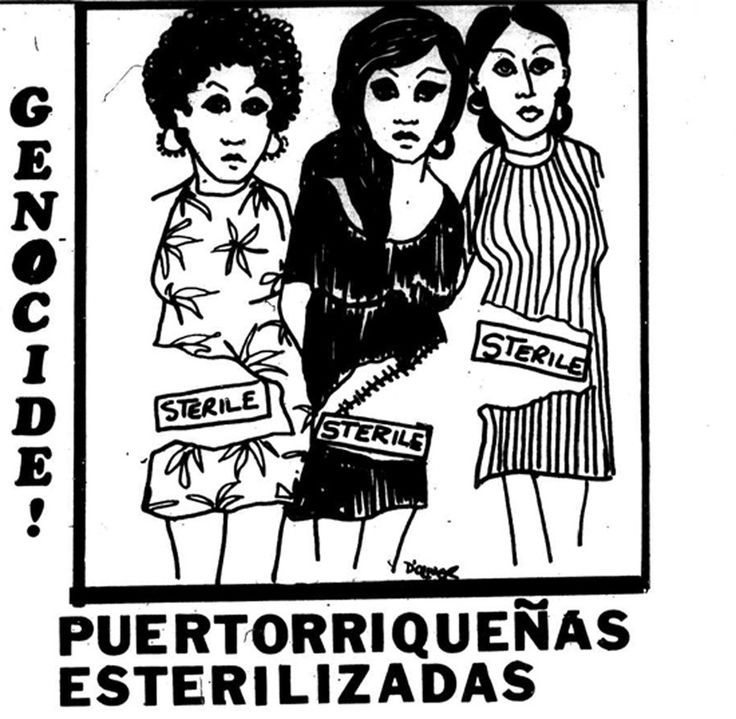
La Operación – no, it’s not some action movie title, pero oye, it might as well be the code name for one of Puerto Rico’s darkest chapters. We’re talking about a massive, systematic sterilization program that targeted Puerto Rican women for decades under the guise of “family planning” and economic progress. By the 1960s, nearly one-third of Puerto Rican women of childbearing age had been sterilized – giving the island the highest sterilization rate in the world at that time. This was a U.S.-backed campaign framed as an effort to alleviate poverty and “develop” the island, but don’t get it twisted: it was deeply rooted in colonial control, racism, and eugenics. In plain terms, Puerto Rico’s growing Boricua population was seen as a problem – a threat to the mainland’s racial order and a convenient testing ground for population control policies. (Sound familiar? We’ll see this play out again and again around the globe.) But anyways, I digress… let’s break down how La Operación unfolded before we connect the dots to the broader pattern.
Timeline: From Colonization to “La Operación” and After
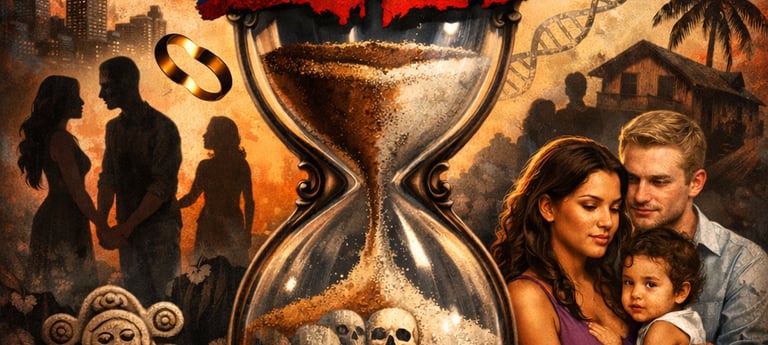
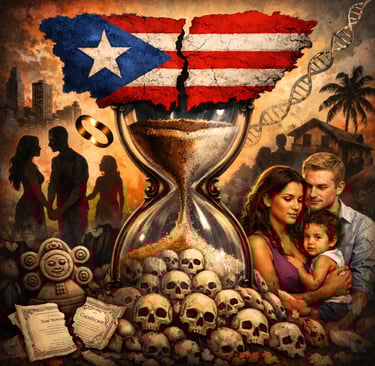
By the late 1960s, about one in three Puerto Rican women had been sterilized under “La Operación,” a massive sterilization program deceptively sold as voluntary birth control. This image shows a Puerto Rican mother and child – a poignant reminder of the families forever changed by these policies. The human cost behind the statistics is immeasurable.
1898: The United States annexes Puerto Rico following the Spanish-American War. U.S. colonial officials quickly begin viewing Puerto Ricans through a racist, patronizing lens – as a “primitive” people needing guidance (yup, the white savior complex runs deep). By the early 20th century, mainland policymakers are fretting that Puerto Rico’s “overpopulation” will spur mass migration of brown Puerto Ricans to the mainland, upsetting the racial status quo. In other words, they feared Boricuas multiplying and – heaven forbid – moving to New York or Florida. This colonial anxiety set the stage for drastic population control measures.
1937: Puerto Rico, under U.S. influence, enacts Law 116, the last eugenics-based sterilization law in any U.S. territory. This law made surgical sterilization officially legal and “free” as birth control. Soon after, U.S.-funded programs swung into action. Health officials (often backed by American money, like USAID grants) fanned out into poor and rural areas, aggressively advocating sterilization to Puerto Rican women. Factories even hosted family planning clinics offering free sterilizations to female workers. The idea was to reduce the island’s population growth, which colonial administrators blamed for poverty and unemployment. And hey, if that meant more women available for cheap labor in Yankee factories (with no maternity breaks needed) – even better for American business, right? This is when sterilization on the island became so common it earned a nickname: “la operación” (literally “the operation” – a term whispered in communities with a mix of resignation and fear).
1940s – 1950s: The sterilization campaign ramps all the way up. Doctors and nurses (often misinforming patients) push sterilization as the preferred form of birth control. By 1947-1948, an estimated 7% of Puerto Rican women had already been sterilized; by 1956, roughly one in three Puerto Rican women had undergone the operation. Let that sink in: one-third of the island’s women – mostly of the poorer and working classes – permanently prevented from having children, many without truly understanding what had been done to them. During this same period, Puerto Rico also became the lab rat for American pharmaceutical trials – most infamously, the testing ground for early birth control pills. In the mid-1950s, doctors like Gregory Pincus and John Rock ran large-scale clinical trials of high-dose contraceptive pills on Puerto Rican women. The women were told little about the experimental drug’s risks; several suffered severe side effects or even died, but the trials forged ahead. (So if you’re on the Pill today, remember that it was perfected on the bodies of Puerto Rican women who weren’t given a choice – BUT ANYWAYS, I DIGRESS…). The takeaway: Puerto Rican women’s reproduction was being controlled by any means necessary – cut the fallopian tubes or pump full of hormones – all in the name of “modernization.”
1960: Puerto Rico repeals Law 116, ending the legal umbrella for eugenic sterilization. You’d think that would slow things down – nope! Sterilizations continued unabated as “voluntary family planning.” The procedure was so normalized that many Puerto Ricans just assumed it was what you do after having a couple of kids. Doctors often referred to it euphemistically (e.g. “tying your tubes”), rarely explaining that it was irreversible. And since most informational materials were in English (which many Puerto Ricans didn’t read), true informed consent was a joke. Even after the law was gone, the colonial health policies kept steamrolling on.
Late 1960s: Puerto Rico hits peak “La Operación.” By 1968, about one-third of women of childbearing age were sterilized – the highest percentage in the world. Entire towns had generations of women who underwent “la operación.” If you’re Puerto Rican and your abuela or bisabuela came of age in the ’50s or ’60s, chances are high this policy touched your family. This was also around the time the global spotlight started to flicker onto the issue. Puerto Ricans themselves (and allies in the mainland Latino and Black communities) were beginning to connect the dots and raise hell about what was happening.
1970s: Resistance and revelations. Puerto Rican and other Latina feminist activists, such as members of the Young Lords Party (a revolutionary group founded by Puerto Ricans in the U.S.), start calling out sterilization abuse. They pointed out how women were pressured into the procedure and often lied to – told their tubes were being “tied” without being told it meant permanent sterilization. In 1974, Puerto Rican doctor and activist Dr. Helen Rodríguez-Trías testified before the U.S. Congress about the abuses occurring in Puerto Rico and across U.S. hospitals. She and others formed the Committee to End Sterilization Abuse (CESA), uniting Black and Latina women to fight for informed consent laws. Their work (combined with outrage over a shocking case of two young Black girls sterilized in Alabama – more on that later) led to new federal guidelines in 1978 requiring consent forms in multiple languages, waiting periods, and age restrictions for sterilization procedures in any hospital receiving federal funds. (Imagine that – it took until 1978 for the U.S. government to kinda-sorta admit that forced sterilization is not okay.)
1982: The documentary film “La Operación” by Ana María García premieres, finally ripping the veil off this issue for a wider audience. The film features Puerto Rican women telling their own stories – many for the first time – about how doctors pressured them into surgery right after childbirth or how they discovered years later that they’d been sterilized without consent. It’s a gut-wrenching watch, but it sparked an awakening. Puerto Ricans began to realize that what happened wasn’t a weird isolated incident – it was a deliberate policy. The documentary became a touchstone of Puerto Rican cultural memory; in college classrooms and community centers, discussions of “la operación” started with “We did not forget” and ended with young Boricuas vowing “Nunca más” (never again).
1990s – Present: In the aftermath of these revelations, the rates of sterilization in Puerto Rico finally declined. Other forms of contraception became more accessible, and women became (rightfully) suspicious of any “free” operation being offered by the government. However, the legacy lives on. Puerto Rico’s birth rate plummeted (today it’s one of the lowest in the hemisphere), and many point to la operación as a cause of demographic and societal shifts. To this day, a sense of mistrust lingers toward the medical system – a feeling of “they tried to wipe us out”. And sadly, as we’ll explore next, the same damn playbook of reproductive control has been used against other communities around the world before and since. La Operación wasn’t a one-off – it was part of a global pattern of colonial and racist population control.
Cultural Impact: Memory, Trauma, and Resistance in Boricua Communities
The impact of La Operación on Puerto Rican culture is deep – a mix of trauma, silence, but also defiant knowledge. For years, this massive sterilization campaign was something talked about in hushed tones. Imagine: you’re a Puerto Rican daughter or granddaughter who learns that Mamá or Titi had “la operación” in her twenties and could never have kids after. There’s pain and anger there, often unspoken. Why would our own doctors do this to us? This collective trauma seeded a mistrust in institutions that you can still feel today. It’s one reason why many Boricuas approach mainland-run health initiatives with side-eye skepticism – history taught them to be wary when officials come offering “help.”
Yet, confronting this history has also become a source of cultural pride and resistance. Puerto Ricans have a saying: “¡Ya basta!” (Enough already!) The exposure of La Operación through activism and media in the 1970s and 1980s fueled a broader movement of Boricuas reclaiming their narrative. The 1982 documentary La Operación itself became a cultural landmark – it gave voice to women who refused to be victims in silence. In community centers from San Juan to New York’s Spanish Harlem, screenings of La Operación sparked discussions that often ended in outrage and tears, but also in empowerment – knowledge truly is power. We learned what our mothers and abuelas went through, and we learned to call it by its name: an injustice, a colonial atrocity. And by learning, we honor them.
Artists, writers, and poets took this knowledge and ran with it. You’ll find references to forced sterilization in Puerto Rican literature and poetry as an allegory for colonialism – the idea that the colonizer not only wants your land and labor, but even control over your ability to create life. Talk about control. Puerto Rican feminists in particular have been loud and unapologetic about this issue. They connected the dots between La Operación and other abuses (like testing dangerous birth control on island women, as mentioned) to build solidarity with other women of color. This intersectional awareness is something the Young Lords and groups like CESA championed – Puerto Ricans working alongside Mexicans, African Americans, and Native activists in the 1970s realized “hey, they did it to us too.” Out of this grew a sense of Pan-Latinx and pan-Indigenous solidarity. Our communities started sharing stories: the Puerto Rican grandma sterilized in Bayamón, the Chicana mother sterilized in Los Angeles, the Black sisters in Alabama, the Diné (Navajo) woman sterilized by the Indian Health Service. Different peoples, same fight.
Culturally, remembering La Operación has become a rallying point for Puerto Rican identity and resistance. It’s a reminder that our people have survived attempts to erase us – literally. We carry the resilience of those who resisted. Many Puerto Ricans now wear that history as a badge of honor: Look at what we’ve overcome. You’ll hear older folks say, “Aquí estamos y no nos fuimos” – We’re still here and we never left. That sentiment is echoed in campaigns to include this history in our education, so that younger Boricuas know the truth. It’s about reclaiming our narrative from the bland textbooks that might mention “population control programs” in one sanitized sentence. Nah, we tell the full story at the dinner table, in activist teach-ins, on social media threads – making sure the next generation hears both the horror and the pride: the horror of what was done to us, and the pride in how our people fought back and are still fighting. The cultural impact is ultimately a mixture of grief and empowerment, and it fuels the fire in Puerto Rican movements for justice today.
And that fire isn’t just for Puerto Ricans. La Operación’s legacy resonates with other communities of color, who say “we know that playbook – they tried it on us too.” Which brings us to the bigger picture: this wasn’t only about Puerto Rico. It was a test case, a part of a worldwide pattern of controlling and terrorizing indigenous and marginalized peoples. So let’s zoom out and see how La Operación connects to the global puzzle of oppression and why it matters for everyone.
Why It Matters: La Operación Wasn’t Alone – A Global Pattern of Eugenics and Colonial Control
If you thought the forced sterilization of Puerto Rican women was an isolated incident, think again. It was one chapter in a much larger, ugly story – a global saga of governments using sterilization to stamp out “undesirable” populations. La Operación matters not just because of what it did to Puerto Ricans, but because it’s emblematic of a pattern that spans continents and decades. From the early 20th century to today, the same script repeats: label a group as inferior or threatening, then attempt to control their population in the name of “progress,” “public health,” or “cost savings.” It’s always the same bogus excuses masking the same horrors rooted in eugenics, racism, and colonial fear. Still not convinced? Let’s line up the evidence:
United States Eugenics Era (1900s–1970s): The mainland U.S. was sterilization central. By 1937, two-thirds of American states (about 32 of 48 states at the time) had passed laws permitting involuntary sterilization of those deemed “unfit” – typically targeting people with disabilities, the poor, the incarcerated, and disproportionately people of color. Under these programs, over 60,000 Americans were sterilized in the 20th century. California’s program was the most aggressive: from 1909 to 1979, around 20,000 people were sterilized in California alone under eugenics laws, disproportionately Latinas/os and other people of color. (California’s zeal for eugenics was so bad that Nazi Germany actually borrowed ideas from it – yes, really.) This wasn’t ancient history – our grandparents lived this. In fact, some of those same laws stayed on the books until the late 1970s, and one state (Oregon) performed a last forced sterilization as late as 1981!
Los Angeles, 1960s–70s (Madrigal v. Quilligan): In the supposedly progressive post-war era, doctors at the Los Angeles County+USC Medical Center were coercing Mexican immigrant women into sterilization right after they gave birth. Many of these women spoke little English and were handed consent forms in English while in labor or recovering from anesthesia – in other words, they had no idea what they were signing. In 1975, ten of these women – now known as the Madrigal Ten – sued the hospital in a case called Madrigal v. Quilligan. The whistleblower who exposed the practice testified that Spanish-speaking women were pressured repeatedly during childbirth to “agree” to sterilization. What did the judge rule in 1978? He sided with the doctors. He outrageously claimed the issue was just a “communication breakdown” and even opined that Mexican women might feel sterilization only hurt because it stopped them from having the big families they supposedly desire – basically playing on stereotypes and brushing off the women’s trauma. This case lit a fire under Chicano and Puerto Rican activists, who saw it as part of the same struggle for bodily autonomy.
Relf v. Weinberger (1973): Sometimes it takes a horrific case to jolt the public awake. In Alabama, Minnie Lee Relf (14 years old) and Mary Alice Relf (12) – two Black sisters – were forcibly sterilized by a federally funded clinic. Their illiterate mother had unknowingly “consented” with an “X” signature, thinking her girls were getting birth control shots for temporary contraception. The truth came out only after the girls were permanently unable to have children. The Southern Poverty Law Center sued on their behalf (Relf v. Weinberger), and the case exposed that thousands of poor Black women and girls had been sterilized across the South under federal programs. It was a nationwide scandal: suddenly Americans learned that an estimated 100,000 to 150,000 low-income people (mostly Black, Latina, or Indigenous) had been sterilized in the late 60s and early 70s with federal funding. The Relf case is what directly pushed the U.S. government to tighten regulations in 1978 as mentioned earlier. In short, two little Black girls’ suffering forced an acknowledgment that maybe this was a problem.
Native American Women (1970s): If you want the most stark example of colonialism at work, look at Indigenous peoples. In the early 1970s, the U.S. Indian Health Service (IHS) was basically running La Operación: Native Edition. A government investigation in 1976 (thanks to Native activists and Senator James Abourezk) found that in just four IHS areas, over 3,400 Native American women were sterilized without proper consent between 1973 and 1976. Worse, some of these women were as young as 11 years old, and this happened despite an explicit moratorium on sterilizing minors. And that was only a partial count – those four areas were the tip of the iceberg. Extrapolating from those numbers, researchers estimate that anywhere from 25% to 50% of ALL Native American women of childbearing age were sterilized in the 1970s. Read that again. Up to half of Native women – gone, in a decade, from the future of their nations. That’s not “healthcare”; that’s a slow genocide. No surprise, this happened during the Red Power movement when Native Americans were asserting their rights – can’t have that, right? The U.S. government never formally apologized for this, by the way (shock).
Modern California Prisons (2000s): Think eugenics is a relic? Tell that to the women in California’s state prisons. Between 1997 and 2013, nearly 1,400 incarcerated women (disproportionately Black and Latina) in California were sterilized, many without proper consent or under duress. Prison doctors targeted those they judged likely to re-offend (read: poor women of color) for tubal ligations, sometimes literally during childbirth without full consent. In 2010, a courageous prisoner named Kelli Dillon discovered she’d been given an unauthorized hysterectomy while in prison (they told her it was to remove a cyst; it wasn’t). She became an activist and her story, featured in the documentary Belly of the Beast, helped expose this abuse. Public outrage finally pushed California to ban prison sterilizations without consent in 2014 and even offer reparations in 2021 to survivors of both the old eugenics program and the prison abuses. But think of all those women who can never have children because some prison doctor played God with their bodies in two-thousand-frickin-five. The mentality never died – it just moved from asylums to prisons.
ICE Detention Centers (2020): Remember those headlines in 2020 about a doctor in a Georgia ICE facility dubbed “the Uterus Collector”? Sadly, not a wild conspiracy – multiple immigrant women detained at the Irwin County detention center came forward to say a gynecologist performed excessive or unnecessary hysterectomies and surgeries on them without proper consent. A whistleblower, Nurse Dawn Wooten, filed a complaint reporting that an alarmingly high number of detained women (many Spanish-speaking) were being sent to this doctor and coming back without their uteruses. The women often didn’t understand what was being done to them. The news shocked people who thought “forced sterilization in the USA? No way, that ended in the 70s!” – well, it should have ended, but here it was again. (A legal inquiry later disputed some details, but the fact remains that ICE had zero safeguards to prevent potential abuse.) The incident drew direct comparisons to the U.S.’s long history of eugenics and sterilization abuse. It was a chilling reminder that when you dehumanize people (in this case, undocumented immigrants), the door opens to these atrocities. Different decade, similar story.
Peru (1990s) – Fujimori’s “Family Planning”: Lest we think this is only a U.S. problem – hop down to Peru in South America. In the mid-1990s, President Alberto Fujimori launched a massive sterilization campaign as part of a “National Population Program.” The targets? Primarily poor Indigenous women in rural Quechua and Aymara communities. Under this program, about 300,000 people were sterilized between 1996 and 2000, the vast majority Indigenous women. Let that number sit for a second: three hundred thousand. Women were often rounded up in remote villages with promises of food or medical care, then pressured or sometimes physically forced to undergo tubal ligations. Some were lied to that the procedure was reversible. Others were threatened with fines or jail if they had “too many” children. This was the largest state-run sterilization effort in the Americas in modern history. And it was absolutely rooted in racism – Fujimori’s government viewed Indigenous people as impediments to economic growth and essentially tried to engineer them out of existence in the name of “development”. It’s been widely condemned as a human rights violation (human rights groups call it a form of genocide), and after decades of activism by Indigenous women, Peruvian courts have only recently (as of 2023) put some of Fujimori’s former officials on trial for these crimes. The wheels of justice turn slow – but the women never forgot.
China (2010s–Present) – Uyghur “Birth Control”: Across the world in western China, another chapter of this story is unfolding right now. The Chinese government has been carrying out a brutal crackdown on the Uyghurs, a Muslim Turkic minority in the Xinjiang region. Apart from mass detention camps, part of this repression is explicitly aimed at reducing Uyghur birth rates. Reports and investigations (including one by the Associated Press) revealed that China is forcing Uyghur women to have IUDs inserted, undergo abortions, and be sterilized as part of a campaign to suppress their population growth. In fact, local authorities in Xinjiang literally set targets for how many women need to be sterilized or fitted with birth control – a policy directive to “cut birthrates” among minorities. Birth rates in predominantly Uyghur areas have plunged by over 60% in just a few years, a drop not seen anywhere else without war or famine. Uyghur women have testified about being threatened: if they refuse the procedures, they risk being thrown into the internment camps. The Chinese state frames this as part of its “anti-extremism” efforts – as if having babies is an extremist act. Let’s call it what it is: an attempt to demographically strangle a people. Experts have labeled it “demographic genocide”. The frightening thing is how familiar it sounds. Whether it’s Chinese officials talking about “upgrading population quality” or American eugenicists blabbering about “feeblemindedness,” it’s the same hatred in different words.
Looking at all these examples, a clear truth emerges: they are all connected by an underlying ideology. Call it white supremacy, call it settler colonialism, call it just plain evil – it’s a worldview that fears and hates the fertility of certain groups. Why? Because a growing population of the oppressed is seen as a threat to the oppressor’s power. These campaigns always target Indigenous people, Black people, immigrants, the poor – those with a deep connection to their culture, their land, or simply those who don’t fit the ruling class’s idea of “desirable.” In Puerto Rico, U.S. elites feared a mass of jobless brown Puerto Ricans flooding the mainland. In California and the South, they feared “welfare moms” and the “unfit” overrunning society. In Peru, the government feared that Indigenous highlanders would keep having lots of kids and stay poor (rather than blaming, you know, systemic inequality). In China, the Communist Party fears the Uyghurs’ distinct identity and resistance, so they seek to literally diminish them in number.
At the heart of it, there’s a primitive fear that if these original peoples – the ones with deep ancestral ties to the land – continue to grow and reclaim their rights, they might upset the global order. The colonizer mindset is practically allergic to Indigenous resilience. There’s a paranoia of the “other” multiplying. It’s the same impulse that drove earlier genocides, just wearing a lab coat and hiding behind sterile surgery tools instead of guns. They don’t just want to kill us; they want to stop us from even being born. Why it matters is because it lays bare the intention: to erase cultures and communities by cutting off their future generations.
And let’s get real about another aspect: the fear of Indigenous and colonized peoples isn’t just numeric – it’s spiritual and cultural. Those in power fear people who remember their roots and live in ways that challenge Western capitalist norms. There’s this subconscious terror that if the original stewards of the land (whether Boricuas, Navajos, or Uyghurs) regain any sort of control, they’ll upend the systems that keep profits and power flowing to the few. Think about it: Indigenous communities worldwide often hold values of communal land, living with the earth, prioritizing people over profit. To a capitalist colonial state, that’s heresy. They worry that if such people thrive and multiply, they might inspire a different way of life that could undermine the sacred pillars of Western society – you know, things like exploitative economies, private property, hyper-individualism. It sounds almost conspiratorial, but how else to explain the irrational lengths they’ve gone to eliminate Indigenous populations? It’s as if they fear that if those peoples weren’t suppressed, their very existence would be a living rebuke to the colonial order, possibly even a seed for its collapse. In Puerto Rico’s case, perhaps the greatest fear was that Boricuas, if truly empowered, would reject U.S. rule and bring their own paradigm (one not strictly bound to U.S. currency or laws) – and indeed, independent Puerto Rico or strong Puerto Rican autonomy could inspire others. These are the nightmares of empires.
Why does all this matter today? Because the fight is not over. Forced sterilization and reproductive oppression are not just history – as we saw, they are still happening in new guises. And even where they’ve stopped, the damage is done and the pain carries on. Understanding La Operación and its global kin matters for young people, especially young people of color, because it is both a warning and a call to arms. It’s a warning of what happens when we are not vigilant about our rights – governments literally policing our wombs. And it’s a call to arms in the sense that we have to protect our communities’ right to exist and grow. This history puts fuel in the fire of movements for bodily autonomy, reproductive justice, and anti-colonial resistance. It reminds us that reproductive rights are not just “women’s issues” – they are fundamental to a people’s survival. The ability to have a family (or not have one, by choice) is at the core of freedom.
Lastly, it matters because remembering is resistance. Every time we say “¡Nunca jamás!” (never again) and teach these truths, we break the cycle a little. The architects of these policies counted on our silence and ignorance. They wanted these stories buried, labeled as regrettable mistakes or isolated incidents. By drawing the connections from San Juan to Los Angeles to Lima to Xinjiang, we expose that there’s nothing isolated about it. It’s a concerted pattern – one that we can disrupt by standing together across communities. When Black, Brown, Indigenous, Asian, and all oppressed peoples recognize that common thread, we form a tapestry of solidarity that scares the hell out of the powers that be. And so it should. Because we’re coming for that justice, with our ancestors at our backs.
Call to Action: Reclaiming Our History, Our Bodies, Our Future
To my fellow Boricuas, and to all young people of color reading this: this is your call to action. The story of La Operación, and all its global parallels, is not just meant to make us sad or angry (though it damn well should). It’s meant to light a fuse in you. It’s a story of what has been done to us without our consent, and it’s a story that you must ensure is never repeated on our watch. So what do we do with this knowledge?
First, we remember and we educate. Start conversations about this history – with your family, friends, in your classes, on social media, wherever. So many people still don’t know that the U.S. government sterilized Puerto Rican women or Native women, or that thousands of Latinas and Black women were subjected to this abuse. Don’t let it stay buried. If you’re Puerto Rican, reclaim this part of our history with pride and rage – pride for our resilience, rage for what they did. Same goes if you’re from any community mentioned: talk to your elders; document their stories. We have to amplify the voices of those survivors who were silenced for so long. Share articles, documentaries (La Operación should be required viewing!), make TikToks, write music, poetry – whatever it takes to get the word out. This isn’t some distant tale; it’s the blood and tears that flow in our veins.
Second, connect the dots and build solidarity. Understand that our struggles are linked. The forces that tried to wipe out Boricua women’s ability to have children are the same forces caging kids at the border, poisoning water on Native reservations, and profiling Black mothers as unfit. It’s all connected by that mindset of control and fear of “the other.” So link up with sisters and brothers from other communities. Stand up when you see reproductive rights under attack anywhere. Whether it’s fighting modern eugenics in healthcare (like unequal access to maternal care or attempts to restrict abortion and birth control) or calling out environmental racism (which is another way they try to harm our ability to raise healthy families), it’s all part of securing our right to exist and thrive. As an example, support groups like California Latinas for Reproductive Justice, or Black and Indigenous women’s organizations pushing for accountability and reparations for these abuses. When we show up for each other’s causes, we form that united front that our oppressors have nightmares about.
Third, demand justice and change. History is only “in the past” if you’re privileged enough not to feel its effects. But we, in our communities, live with history’s consequences daily. So fight for remedies: push for curricula that include these truths (no more whitewashed health class that skips over eugenics). Support legislation that compensates survivors of sterilization abuse – like how some states are finally paying reparations to victims of eugenics programs. And beyond compensation, demand guarantees that it never happens again. That means strict laws and oversight in hospitals, prisons, and detention centers. That means diverse doctors and informed consent in every language. That means holding onto bodily autonomy like our lives depend on it – because they do. As a Boricua, I say: my body is not yours to experiment with, period. And that goes for all our bodies.
In practical terms: get involved with reproductive justice orgs, even if it’s just as a volunteer or a blogger or a supportive voice. If you’re medically inclined, become the kind of doctor or nurse who advocates for patients’ rights, not like those who betrayed our grandmothers. If you’re an artist, channel this history so it reaches hearts as well as minds. Use that coraje (righteous anger) productively – maybe you rally folks for a protest, maybe you start a petition for a memorial for the victims of La Operación, maybe you simply ensure your generation doesn’t forget. Speaking of which:
Never forget. That’s the bottom line. We did not forget, and we will not let these atrocities be swept under the rug. The people in power want you to forget, to move on, to chalk it all up to “mistakes of a different time.” Nope. We carry our ancestors’ stories and scars, and in doing so we carry their strength. Every Puerto Rican today is a testament that their plan failed – we’re still here. Every Native American newborn, every Black or Brown baby brought into this world by parents who love them, is a victory against those who tried to play God with our population.
Young Boricuas and fellow POC: you are the generation of truth-tellers and change-makersTake this torch and run with it. Be unapologetic in demanding the respect and autonomy our ancestors were denied. And whenever they try to feed you lies or silence, shout our truth louder. Our foremothers literally fought (some died) for the right to have us here. Let’s honor them by kicking ass in the struggle for a more just future. Because if there’s one thing our beautiful Black, Brown, Indigenous communities have shown time and again, it’s that we can survive anything – and not just survive, we can seriously kick ass when united.
So be not afraid to declare in the face of all the demon-spawn who tried to erase us: #WeDidNotForget. Now it’s on us to ensure no one forgets – and to build a world where no one will ever have to live through La Operación (or anything like it) again.


Final Thoughts: Adding Insult to Injury - Revealing The Quiet Erosion of Our Lineage
With all that has been disclosed about the treacherous sterilization acts inflicted upon Puerto Rican women, one would think our community would be hyper-vigilant about preserving what remains of our people. History already tried to erase us. Now, a quieter force is doing damage from within: our own relationship patterns, our own reproductive choices, our own disengagement from building stable family structures.
Puerto Ricans in the United States have some of the lowest marriage rates among Hispanic groups. Roughly 39–41% of Boricuas are married, compared to 46–48% across the broader U.S. Hispanic population. Cubans, for example, often exceed national averages. Even more striking, Puerto Ricans born on the mainland marry at a rate of about 36%, while those born on the island hover closer to 45%.
That gap matters. It reflects more than paperwork. Marriage has historically been the backbone of multigenerational stability, inheritance, cultural transmission, and identity continuity. When a people already wounded by displacement and sterilization begin opting out of long-term union altogether, the result is fragmentation. Children grow up without rooted structure. Elders lose lineage continuity. Culture becomes aesthetic rather than lived.
Some will argue this is about youth. The Puerto Rican population skews younger. Others will point to economics. Fair. But those explanations do not account for everything. Puerto Ricans are also far more likely than other Latino groups to cohabit without legal marriage. We normalize “forever girlfriend” and “baby-mother” arrangements that rarely solidify into durable households. These relationships often dissolve under stress, leaving children straddling households, surnames, and identities.
Then there is intermarriage. Puerto Ricans have the highest rates of marrying outside their ethnic group among U.S. Hispanics. Large numbers marry non-Hispanic whites or partners with no cultural ties to Puerto Rican heritage. Intermarriage itself is not immoral. Love is love. But demographics are ruthless. When a small, colonized people disperses its reproductive future outward while failing to stabilize inward, dilution accelerates.
Compare this to non-Hispanics, who maintain marriage rates near 48%. Puerto Ricans, depending on location and cohort, range between 24% and 39%. That is not coincidence. That is cultural disintegration in motion. A people already subjected to forced sterilization now voluntarily chooses instability, transience, and low-commitment bonds. We are doing the work of erasure ourselves.
This is not nostalgia. It is arithmetic. Every generation that fails to anchor its children in enduring households loses language, ritual, story, and memory. Blood becomes genetic data rather than lived inheritance. Taíno ancestry becomes a slogan instead of a lineage. Identity becomes costume.
We can't scream about genocide while refusing to build our own futures within our own ethnicity. We cannot mourn stolen wombs while treating commitment as optional. And we damn sure can't claim ancestral power while dissolving the very structures that carry our ancestry forward. The irresponsible handling of carnal desires has led a great many astray. A set of people survive through continuity. Through names passed down. Through homes that outlive families. Through elders who know where they came from and children who know where they belong. Without that, no flag, no anthem, no viral post will save anything.
The question is no longer what was done to us.
The question is what we are now doing to ourselves.