
Puerto Rican Nationalists: Where Did They Go?
Illya Burke - Serralta - Hernandez
11/13/20238 min leer
Before anything else, let’s clear one thing up — history context matters, and Puerto Rico’s struggles didn’t begin with the United States. Under Spanish rule, the island lived under centuries of suppression. Spain kept slavery going in Puerto Rico until 1873, long after other regions had already ended the practice. Voting? Forget it. Economic uplift? Barely existed. The majority of Puerto Ricans lived poor, overworked, and voiceless.
So when the U.S. stepped in, Puerto Rico was already in a deep crisis. Whether or not U.S. involvement “helped” is a debate that never ends — but one thing is undeniable: Spain kept Puerto Ricans enslaved, silenced, and politically nonexistent.
What happened in Puerto Rico from the end of the Spanish-American War (1898) up through U.S. citizenship in 1917 was the turning point many sources gloss over:
After the United States defeated Spain in the Spanish-American War, Puerto Rico was formally ceded to the U.S. under the Treaty of Paris in December 1898, ending centuries of Spanish colonial rule and placing the island under American authority. In the immediate aftermath, a U.S. military government administered the island, reorganizing public services, schools, sanitation, and infrastructure but exercising tight control over political life. Because if it were up to Spain, Puerto Ricans would've gone without electricity or proper latrines for as long as possible, as Boricuas were viewed as property. (neglected property, at that).
In 1900, Congress passed the Foraker Act, which replaced military rule with a civil government: Puerto Rico became an “unorganized territory” of the United States with a U.S.-appointed governor and limited self-government, although residents remained neither U.S. citizens nor fully enfranchised in their own governance. Over the next decade, local leaders and the island legislature pushed for greater autonomy, and Congress responded with adjustments such as the Olmsted Amendment of 1909, which expanded presidential oversight of the island’s government. Throughout this period, debates simmered on political status, economic control, and cultural autonomy. Finally, against the backdrop of rising global tensions and America’s looming entry into World War I, Congress enacted the Jones-Shafroth Act on March 2, 1917, reorganizing Puerto Rico’s government, establishing a bill of rights, and—most consequentially—granting statutory U.S. citizenship to Puerto Ricans, a power move that reshaped the island’s political relationship with the United States and made its residents eligible for the draft and greater integration into U.S. civic/civil life. (history.com)
And for me — born and raised in NYC — my reality is even more layered.
To anyone abroad, I’m American.
To Americans, I’m Puerto Rican.
Get it? Good. Now let’s move on…
The Rise of the Puerto Rican Nationalist Movement
The Puerto Rican Nationalists of the early-to-mid 20th century brought a fire that the modern island barely remembers. These were not passive patriots — they were people who believed in independence so fiercely they were willing to be jailed, hunted, beaten, and in some cases, killed.
And although their voices were silenced through long prison sentences, the reasons behind their fight remain alive today — buried under politics, exhaustion, and the island’s continued crises.
Because Puerto Rico’s turbulence started way before the flag ban. The Gag Law was just the government’s way of trying to smother a flame that had already been burning for decades.
The Gag Law (Law 53 of 1948) The Flag Ban That Tried to Erase a Nation
On June 10, 1948, Puerto Rico’s legislature — controlled by the Popular Democratic Party — passed a law that criminalized independence expression. Governor Jesús T. Piñero, appointed by the U.S., signed it.
What the Gag Law Did
Made it illegal to display the Puerto Rican flag, even inside your own home.
Banned patriotic songs, independence speeches, and pro-independence literature.
Outlawed meetings or groups that supported independence.
Violations could bring felony charges, $10,000 fines (≈$134,000 today), and prison time.
Police and the National Guard could enter homes without warrants to seize flags. Just think about that — homes being raided over a piece of cloth. Why the Flag Was Targeted Because the flag symbolized identity, resistance, pride, and the possibility of a Puerto Rican nation.
U.S. authorities feared an uprising — especially after Puerto Ricans became U.S. citizens under the 1917 Jones Act. Citizenship did not erase the desire for independence.
Repeal and Legacy
* Repealed in 1957 under constitutional grounds.
* Left deep scars: arrests, broken families, suppressed culture.
* Today, the flag is a symbol of pride, survival, and diaspora identity — especially in places like NYC.
Key Figures of the Puerto Rican Nationalist Movement
Pedro Albizu Campos: President of the Nationalist Party (1930–1965), brilliant orator, Harvard-educated, and considered the movement’s most influential leader. Advocated for resistance — by any means necessary.
Lolita Lebrón: Led the 1954 attack on the U.S. House of Representatives. Served 25 years in prison and became a symbol of defiance.
Blanca Canales: Led the 1950 Jayuya Uprising and declared the Free Republic of Puerto Rico. One of the only women in the Americas to lead an armed revolt.
Olga Viscal Garriga: Journalist. Activist. A fearless young voice of the Nationalist Party. Jailed for refusing to recognize U.S. authority.
Ruth Mary Reynolds: An American who dedicated her life to Puerto Rican independence and worked alongside the most prominent Nationalists.
Raimundo Díaz Pacheco: Commander of the Cadets of the Republic — the youth wing of the Nationalist Party.
The Decline: Where Did the Nationalists Go?
After Albizu Campos died in 1965, the movement never recovered. The party fractured and eventually collapsed due to a number of factors:
Extreme repression: Debacles like the 1937 Ponce Massacre and countless raids and arrests broke the movement’s structure.
Failed uprisings: The 1950 revolts and 1954 attack on Congress backfired politically, isolating the movement.
Leadership vacuum: Albizu was the backbone. Without him, ideological unity crumbled. Some members joined newer groups like FALN, but even those eventually faded.
Enter FALN: The Next Chapter in Militant Nationalism
The Fuerzas Armadas de Liberación Nacional (FALN) emerged in the 1970s as a clandestine Marxist-Leninist group fighting for independence.
FALN activities include: over 130 bombings in the U.S. and Puerto Rico (1974–1983). Most infamous: the 1975 Fraunces Tavern bombing in NYC — 4 dead, 50+ injured. Members later arrested, charged with seditious conspiracy. In 1999, President Bill Clinton offered clemency to 16 members (none had been convicted for bombings that caused deaths).
And who can forget the Statue of Liberty stunt, another symbolic action, but none of it restored a unified independence movement. Meanwhile, Puerto Rico Continued to Bleed.
Today’s Puerto Rico isn’t battling the same enemy — but it’s still fighting for survival. Over 300,000 Puerto Ricans left during the last recession. The island defaulted on its debt. More cuts to healthcare, education, and public safety. Let's see what else we can mention....the devastated power grid. Or the endless corruption, mismanagement, and neglect from Washington. Take your pick!
And the saddest part? IT FEELS LIKE PUERTO RICO HAS NOTHING LEFT TO FIGHT FOR. The passion isn’t gone — the people are just tired. Exhausted. Disillusioned. No Nationalist leaders. No unified movement. No clear direction. Just crisis after crisis after crisis.
Where Are the Modern Nationalists? The truth is... they’re scattered. Some join small independence groups. Some fight through art or activism. Some leave the island because survival comes first. It's just commonsense where well-being is concerned... Then you have your good intent-turn awry with formations that advocate through informal means like with the Young Lords and eventual formation of the Latin Kings. José “Cha Cha” Jiménez, radical Puerto Rican activist and civil rights icon, passed away on January 10, 2025. He was 76 and a true blue Puerto Rican patriot until his last dying breath! This man was co-founder of the Young Lords, in Chicago back in the day. And along with Mexicans, they eventually formulated the Young Lords Organization (YLO).
The Young Lords and the Latin Kings are often spoken of in the same breath as Puerto Rican nationalism, but that comparison no longer holds weight. Whatever the original intent—community defense, cultural elevation, or political awakening—the people who shaped those missions are long gone, buried alongside the consequences of what followed. The Young Lords were explicitly political, rooted in anti-colonial thought and material aid for their people. The Latin Kings, by contrast, metastasized. What may have begun as an attempt to elevate the word King—to instill dignity where none was afforded—collapsed into disorganization, violence, and internal turmoil. The term Latin itself was never synonymous with liberation, and the modern incarnation of the organization bears NO resemblance to nationalism at all. These people are not political activists but criminal survivalist: hungry, homeless, disposable men cycling through chaos with no ideology, but a fictional mantra of thugism disguised as "lessons". There is no future, and no collective purpose other than to inflict criminality in any form. That is not nationalism. It is willful abandonment of what is proper and just.
I'm going to use the BLM uprisings as a refrence to stress this point: Imagine that kind of energy and those type protests occuring regularly throughout an entire decade. Ooof, no thanks...However, just like then, we're left now with the questions: Where are the wealthy Boricuas? Why aren’t the island’s millionaires and celebrities fixing the grid? Investing in infrastructure? Building sustainable energy? Supporting food systems, hospitals, education? They could. They absolutely could. But most won’t because everyone is waiting for someone to step up, so that they may follow in suit. And in the meantime, the island is left abandoned — by Washington and by its own elite.
In closing, (imo) Puerto Rico is Desperately In Need of New Leadership - Despite what locals want. There comes a point where your need for prosperity needs to outweigh you desire to be independent. It's practically equivalent to a teenager that wants to break free from it's parents despite what's best for him or her. I get that Boricuas are ultra-mega fed up with how they've been dealt with, BUT total independence leaves them open for yet more attacks and seizures from who knows who.
And while the atrocities committed against Puerto Rico by the U.S. is substantial, it all boils down to a case of the 'devil-you-know'-kind of thing. Being a Nationalist today doesn’t mean bombs or rebellion. It means: protecting the island, building its future, rejecting exploitation, and uplifting its people. Puerto Rico doesn’t need another Albizu. It needs architects, engineers, financiers, and innovators. People with power — and heart. Because even though the old movement died, the spirit is still alive. We just need a little help.
https://www.bing.com/ck/a?!&&p=46342c786d8dd9cdfeeab28828425f6cca080babb9e45adb9ae28eccca13f373JmltdHM9MTc2NTc1NjgwMA&ptn=3&ver=2&hsh=4&fclid=313b46a2-b691-6b87-009f-53a5b75c6aca&psq=puerto+rican+history&u=a1aHR0cHM6Ly93d3cuaGlzdG9yeS5jb20vYXJ0aWNsZXMvcHVlcnRvLXJpY28taGlzdG9yeQ
From Street Gang to Revolutionaries — José ‘Cha Cha’ Jiménez and The Young Lords Laid Groundwork for Radical Racial Justice Movements | Religion Dispatches


THE FOLLOWING BLOG ARTICLES ARE PUBLISHED ON EXTERNAL SITES - IMAGERY BELOW LEADS TO MY OTHER WEBSITES
UPGRADE YOUR PUERTO RICAN HOLIDAY MENU BY RETIRING OUTDATED SLAVE FOOD
ISLAND PRIDE -VS- NUYORICAN REALITIES
AN ATTEMPT TO DECIPHER MY PUERTO RICAN DNA
A WATERED-DOWN BLOODLINE - ETHNIC CULLING AND GENOCIDE


ANOTHER LOSING BATTLE: CANCER DISPARITIES AMONG WOMEN OF COLOR, PRIMARILY BORICUAS
LOST TRADITIONS
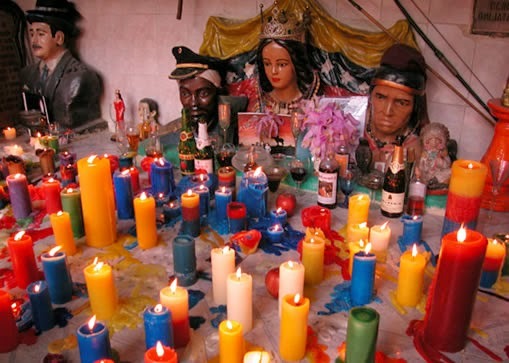
ABOUT VOODOO'S LITTLE SISTER, SANTERIA
*Descargo de responsabilidad: NyRican Diosa mantiene un alto estándar de autenticidad. NyRican Diosa realiza una investigación exhaustiva a partir de diversas fuentes de información pública obtenida de internet. La experiencia personal, las asociaciones y/o el historial laboral también se incluyen en la mayoría del contenido, a menos que se indique lo contrario. Thatfreakingpuertorican / NYRicanDiosa Brand obtiene comisiones como creadora de contenido y emprendedora de marketing de afiliación. Thatfreakingpuertorican y NYRicanDiosa ofrecen enlaces verificables, imágenes e información contrastada. © 2025. Todos los derechos reservados.
conectar:
admin@thatfreakingpuertorican.com hbic@boujeeburke.com admin@g8way.online