
El Barrio: A Closer Look at the Harlem That Raised Our Parents
HARLEMEL BARRIOSPANISH HARLEMNEW YORK CITYINFORMATIVE
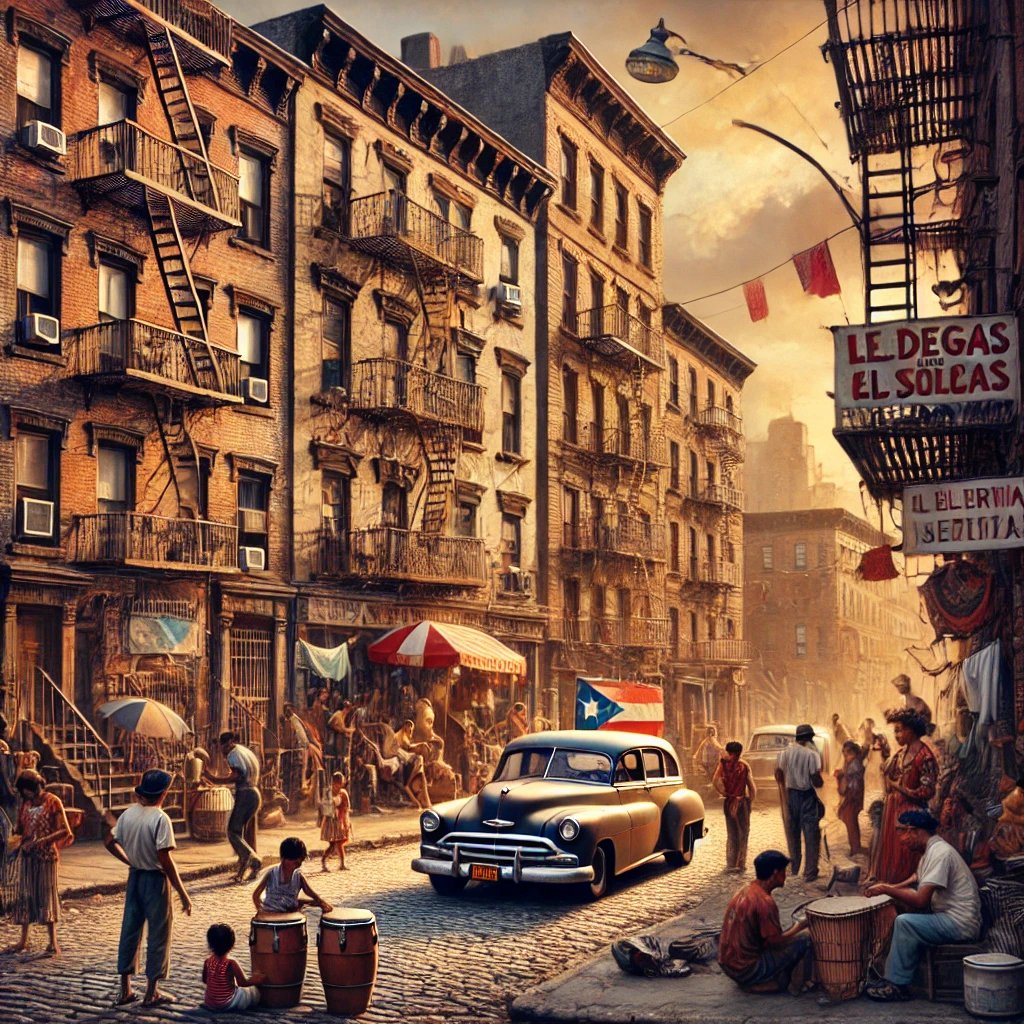
Harlem today is a designer-clad ghost of its own legacy—a gentrified costume wearing the name but none of the soul. But before the brunch spots, the surveillance cameras, and the influencer-friendly murals, there was El Barrio. A stretch of grit and culture where Puerto Ricans, Blacks, and yes—even the Italians who now clutch their pearls—were all thrown into the same melting pot whether they liked it or not.
Between 1945 and 1985, El Barrio wasn’t a vibe—it was an ecosystem. The "Great Migration" made a place where families like mine landed after leaving Puerto Rico to build new lives in cold tenement buildings that somehow still felt warmer than the tropical prison-like island homes they left behind. My mother, her siblings, my grandmother, and her step-father—Justliano Rivera Sr.—they weren’t tourists. They lived it. They survived it. And every story they told became a brick in the foundation of who I am.
The Original Barrio: Culture, Chaos, and Codes
Back then? Harlem wasn’t “ghetto glam.” It wasn’t Instagrammable poverty. It was culture with teeth, music being born in open windows, the smell of adobo and cigar smoke above cracked sidewalks, and kids running wild because the block raised everybody. There was danger—of course there was danger. But there was also a code. Even the hustlers had morale. OGs checked the youngins. A look from an elder meant something. Neighbors fought, screamed, borrowed sugar, raised each other’s kids, and cussed each other out in the same breath. You couldn’t buy those dynamics; you inherited them. We had a good potrion of the City on lock, from Loisida up to El Barrio, the sentiment was the same.
Compare that to now:
Surveillance this. Cancel that. Report this. Exploit that.
Harlem doesn’t breathe the same—it wheezes under a thousand eyes and zero loyalty.
The Italians, the Puerto Ricans, and the Odd Dance of Racism
And let’s clear something up: I STILL do not understand why some Italians held (and sometimes still hold) racist views toward Puerto Ricans. Because back in the day? They were in the same crowded tenements, the same city jobs, the same police lineups. They were profiled too—categorized right alongside Blacks and Ricans.
But racism is a strange, ironic beast. Sometimes the people closest to our struggle are the quickest to distance themselves from it. Italians, Puerto Ricans, Blacks—we were all in Harlem, all scraping, all stigmatized. But some Italians clung to whiteness like it was a lifeboat, forgetting they were sitting on the same steps as us.
Yet there we were—side by side in the boroughs, dancing around each other’s cultures and prejudices like an awkward family reunion.
Music, Movement, and a Neighborhood That Roared
Before Harlem became a brand, it was a forge.
New music wasn’t imported—it was created on those blocks.
Salsa, boogaloo, soul, doo-wop—it wasn’t history then, it was just Saturday night.
People weren’t posing for culture; they were living it raw.
My family’s stories paint it as loud, messy, dangerous, beautiful—alive.
A version of New York City that could break you and make you in the same hour.
Harlem After 2000: A Name Without the Spirit
So when people today brag about being from Harlem—especially El Barrio—after 2000?
Eh… respectfully:
It’s not the same badge of honor it used to be. Because the Harlem that raised our parents and grandparents? That Harlem doesn’t exist anymore. The city scrubbed it, sold the pieces, and painted over the rest. Read more on Puerto Rican Nationalists, here.
But those with lineage—those with memories, stories, scars—they still carry the real Harlem inside them like a heartbeat. Now, how much is passed down to younger generations is up for debate. Unfortunately, I fear that my "old" New York has passed away, and we are left with mere remnants of what once was an awesome experience - if you were lucky enough to have been raised by real-deal New Yorkers in the best city on the eastern seaboard.
But, even still, all of these characteristics and associations that have become synonymous with being Puerto (NuYo) Rican were mainly derived from the nationalists mindset of warrior survivalists that fought for justice. However, nowadays, we’ve reached a point where no strong, organized assembly is fighting for us, and it’s infuriating. Instead of banding together against common enemies – poverty, racism, marginalization – too many of us are at each other’s throats. The result? We’re all being painted as “criminal menaces” rather than functional, rational people worthy of respect. Our youth roam aimlessly, caught up in petty turf wars and dick-measuring contests while the most vulnerable among us continue to suffer. What the hell happened here?! How did we go from revolutionary unity to this chaotic free-for-all?
The Revolutionary Legacy We Left Behind
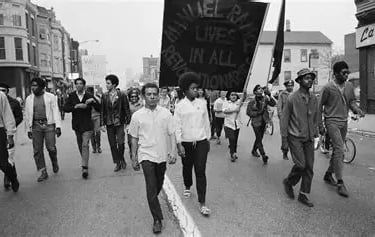
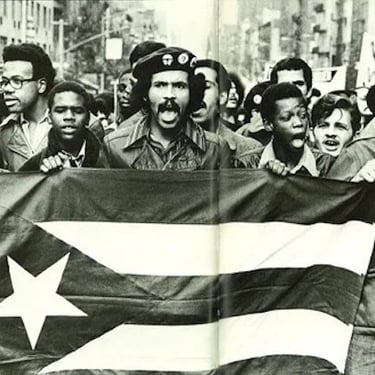
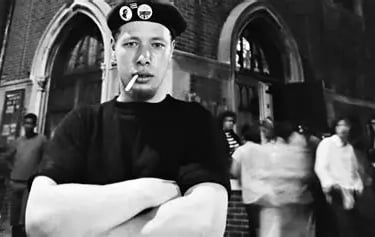
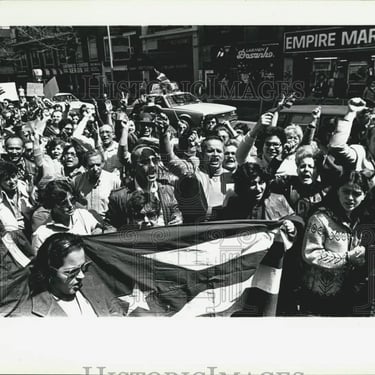
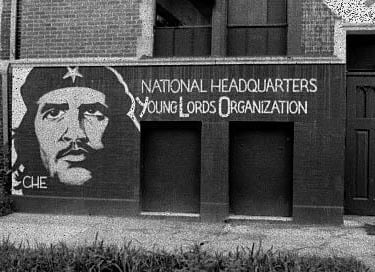
In the late 1960s and early ’70s, Puerto Ricans in the U.S. did have a unified, disciplined movement – one that struck fear into oppressors and hope into our people. They called themselves the Young Lords, and they were a Puerto Rican-led revolutionary nationalist group that started as a Chicago street gang and transformed into a community-based political organization. By 1969, the New York chapter of the Young Lords had formed, and these warriors drafted a 13-Point Program that became their manifesto. This program demanded self-determination for Puerto Rico (liberation of the island and for Boricuas in the States) and for all hispanics and oppressed peoples. They opposed racism and imperialism, fought for community control of land and institutions, and unapologetically called for a socialist society. The Young Lords worked along side the Black Panther Party forming the Rainbow Coalition that helped people of color in general. Not the LBGTQ XYZ fiasco it's became associated with.
Crucially, they recognized the equality of women – explicitly condemning machismo and male chauvinism – and stated that “armed self-defense and armed struggle are the only means to liberation”. Think about that: over 50 years ago our predecessors had the clarity to stand against racism, sexism, police brutality, and colonialism in one breath, and they were ready to defend the community by any means necessary.
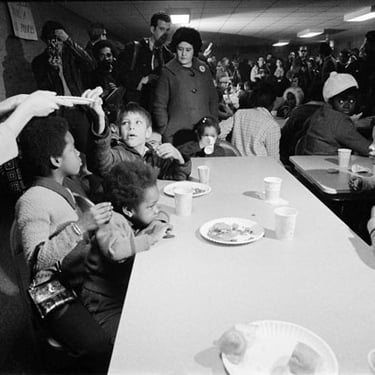
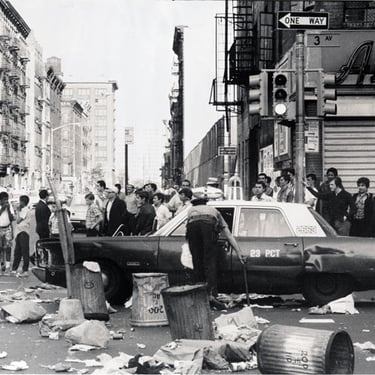
But the Young Lords did more than issue fiery statements. They rolled up their sleeves and served the people. Borrowing a page from the Black Panthers, they established “Serve the People” programs: free breakfast for children, health clinics and screenings, and tenant organizing. They even operated a tuberculosis testing truck in East Harlem and set up lead-poisoning detection programs. The Lords had a dual nature – on one hand providing direct services to uplift their barrios, and on the other hand a paramilitary organization that believed in armed struggle to achieve change. For example, in summer 1969 they literally took sanitation into their own hands with the famous “Garbage Offensive.” When city officials ignored East Harlem’s Puerto Rican neighborhood, the Young Lords and volunteers piled garbage into the streets, blocking traffic and setting trash ablaze until the media and authorities were forced to pay attention. They also occupied institutions that had failed the community. In December 1969, the Young Lords took over the First Spanish Methodist Church in East Harlem – reborn as the “People’s Church” – demanding it be used to provide social services. For 11 days they ran programs from that church (including a free breakfast for kids each morning) until the police stormed in to arrest them. “If children are hungry,” one Young Lord said, “they can’t move on to anything else.” That kind of holistic care for our people – feeding kids, cleaning streets, offering healthcare – earned them love from the community. At the same time, their confrontational tactics earned them the respect they demanded from the power structure (and, of course, intense repression from it).
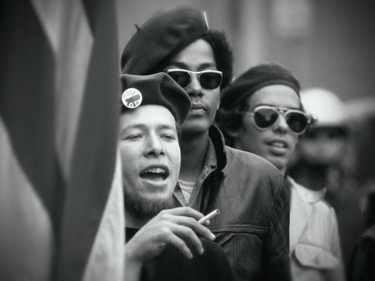
These were not meek, go-along-to-get-along community organizers – they were disciplined radicals unafraid of confrontation. The Young Lords marched under purple berets, trained in self-defense, and studied political theory. Their 13-Point Program even declared solidarity with global anti-colonial struggles and supported political prisoners. They stood shoulder-to-shoulder with Black Panthers and other revolutionary groups, forming coalitions to fight police brutality and racism on all fronts. And notably, women in the Young Lords were on the front lines and in leadership – women like Denise Oliver and Gloria González fought sexism inside and outside the organization, eventually amending the Young Lords’ program to say “Down with machismo and male chauvinism”. In short, this was a movement of Puerto Ricans for survival and dignity – militant, yes, but fundamentally about empowering our community to control its own destiny.
From Revolutionaries to “Criminal Menaces”
So with such a proud legacy of activism, how is it that Puerto Ricans in the U.S. today are so often dismissed as thugs, crooks, and problems? The tragic truth is that after the Young Lords and similar groups were crushed or faded, a leadership void opened – one that got filled by drugs, gangs, and internal feuds. By the late 1970s, the Young Lords were effectively disbanded, brought down by FBI infiltration and bitter infighting. In the decades that followed, many of our neighborhoods were ravaged by the war on drugs and economic neglect. Lacking the kind of community-based institutions the Lords had tried to build, a lot of Puerto Rican youth fell into more destructive paths. Ironically, even some street gangs started with good intentions: the Latin Kings, for example, began in 1950s Chicago with the stated purpose of protecting Puerto Rican immigrants from racist attacks. But without genuine avenues for empowerment, those gangs morphed into the very criminal enterprises the media loves to demonize. By the 1980s, the Latin Kings and others became notorious for violence and drug trade – young Boricuas fighting and killing each other over “territorial pissings.” The energy that once could have fueled political resistance was now being wasted in internecine wars on our own streets.
Let’s be clear: this is misplaced energy that our community can’t afford. Every time Puerto Ricans turn on each other – whether in gang rivalries, local political turf battles, or petty social media beefs – we lose ground in the bigger fight. And the “bigger picture” is very clear: while we’ve been busy cutting each other’s throats, the powers that be have happily kept us marginalized and misrepresented. They point to our neighborhoods and see crime stats, not the systemic poverty causing them. They see images of handcuffed young Boricuas on the evening news and feel justified calling us “criminal menaces.” Meanwhile, those truly weakest among us – the poor, the sick, the elders, the single mothers – continue to go without help, much as they did decades ago. Consider this: over one-fifth of Puerto Ricans living stateside today live below the poverty line, a higher poverty rate than the U.S. average. We’re talking about hundreds of thousands of Boricua families in the 50 states barely scraping by, often concentrated in under-resourced barrios. And yet, where is the organized movement to uplift them? Where is the missionaria zeal we once had to “serve the people” and demand better housing, schools, and jobs? It’s practically nonexistent – replaced by clout-chasing on Instagram and pointless street feuds. We have more Puerto Ricans in the U.S. now than ever before, with an estimated 5.8 million living in the States (far outnumbering those on the island itself). That should be an immense source of strength – millions of us with U.S. citizenship, voting power, and economic contributions – yet disunity and directionlessness make it easy for society to pigeonhole us as a permanent underclass.
And make no mistake, the system loves to play up the “Latino criminal” stereotype to justify its oppression. Puerto Ricans may not always be singled out by name in the media (sometimes we get lumped under “Hispanic” or “Latino”), but the effect is the same. Law enforcement and politicians see Black and brown youth in New York, Philly, Chicago, and assume we’re all gang-bangers. Our communities remain heavily policed and surveilled. In fact, the incarceration rate for Latinos (a category that includes many Puerto Ricans) is more than double that of whites in the U.S. (400+ per 100,000 vs <200 per 100,000 for whites). We’re disproportionately locked up, yet often invisible in the data – prisons don’t even bother to track how many of those Latinos are Puerto Rican. Think about that: our people sit in cells in disproportionate numbers, but as far as the public discourse is concerned, it’s as if Puerto Rican prisoners “don’t exist.” We’re just statistics under “Hispanic – other.” This erasure makes it even easier to ignore our plight and paint us all with a broad brush of criminality.
The stereotype of Puerto Ricans as troublemakers isn’t just statistical – it’s deeply woven into how society has treated any sign of Puerto Rican resistance. Historically, whenever Boricuas stood up, the response was swift and brutal. The Young Lords themselves were monitored and infiltrated by the FBI (COINTELPRO did to them what it did to the Black Panthers), precisely because they broke the stereotype and became something much more dangerous to the establishment: an organized, intelligent force of oppressed people. Mainland authorities long treated Puerto Rican nationalist activists as enemies of the state – look at the decades-long imprisonment of Oscar López Rivera, a Puerto Rican independence fighter labeled a “terrorist” by the U.S. for his involvement in 1970s militancy. He spent 35 years in federal prison (many of them in torturous isolation) until finally being released in 2017. To the Puerto Rican community, Oscar López Rivera is a patriot who fought colonial domination; to the U.S. government he was just a criminal to be caged. This dichotomy – freedom fighter vs. criminal – is the same one young Puerto Ricans still grapple with today. If you try to fight back or organize, you risk being smeared and repressed. If you succumb to the streets, you become the statistics they expect you to be.
Oppression Without End: How the System Targets Us
While we’ve been divided and directionless, the oppression hasn’t stopped – if anything, it’s gotten more insidious. You think police brutality is a thing of the past? Tell that to the Boricua residents of New York City who simply tried to celebrate their heritage and got beat down by the NYPD. Case in point: June 2025, Brooklyn – a queer-friendly Puerto Rican Day Parade after-party in Bushwick ends in chaos when dozens of NYPD officers suddenly swarm the crowd. There was live bomba music and dancing in the street – nothing violent – yet witnesses say out of nowhere cops were shoving and dragging people, knocking them to the ground without proper warning. “You would think there was a shooting, but there was nothing,” one attendee said, describing how absurdly aggressive the police response was. Officers grabbed the sacred bomba drums (which community members were using to celebrate Afro-Puerto Rican culture) and even injured people who tried to protect those drums. In the end, at least five people were hauled off in cuffs, some bleeding and one with a sprained wrist, all because they dared to gather and celebrate being Puerto Rican. This wasn’t even a protest – it was a cultural celebration on our day, on our terms, and still we got treated like a riot that needed crushing. Sound familiar? It’s the same racist, heavy-handed policing our parents and grandparents knew. The difference today is that we’re so disorganized that these incidents come and go, and nothing changes. A few hashtags, maybe a protest or press conference, and then back to status quo. No sustained outrage, no city officials losing their jobs – just another day of our community being manhandled.
Meanwhile, the social conditions that breed internal chaos persist or have worsened. Our neighborhoods still lack quality schools, decent hospitals, steady jobs. We still get redlined into impoverished enclaves – whether it’s Spanish Harlem in NYC or Humboldt Park in Chicago or barrios in North Philly – then blamed for the inevitable blight that follows. Gentrification is pushing Puerto Ricans out of the very cities we helped build, scattering our once cohesive enclaves. And every time a young Boricua falls through the cracks – drops out of school, ends up in a gang or in prison – the pundits wag their fingers and say, “See? They’re irrational, they’re violent.” It’s a self-fulfilling prophecy engineered by a system that wants us to fail. As one Puerto Rican commentator bitterly observed, “They believe we’re criminals… the police are the same as in the United States, the only difference is here they don’t kill us” – that quote was about policing in Puerto Rico itself, but it could just as well describe the mainland. Whether on the island or the mainland, Black and brown Puerto Ricans are profiled and harassed by law enforcement under an assumption of guilt. We’re guilty of being Puerto Rican in America’s eyes – guilty until proven innocent, and frankly, we’re rarely given a chance to prove innocence.
So here we are: population in the millions, rich cultural heritage, U.S. citizenship, a history of brave resistance – yet largely viewed as a problem to be managed. Our community’s image is at a nadir. Those in power see us as a convenient scapegoat or as an afterthought. Even in national conversations about racial justice, Puerto Ricans are often footnotes, lumped in ambiguously with “Latinos” or ignored entirely. And yes, it is alarming and upsetting that in 2026, Puerto Ricans in the U.S. feel as if we’re back at square one – having to justify our humanity and potential to a country that seems to only see us in mugshots or in stereotypes. But here’s the thing: we don’t have to accept this. We can change the narrative – just like the Young Lords did – but it’s going to take a radical shift in our mindset and priorities. The question isn’t whether the system will keep treating us like criminals; it will, as long as we stay disorganized. The real question is: What are we going to do about it?
Reawakening the Fight: A Call to Action
It could be time for a resurgence – a new movement for a new generation of Boricuas in the United States. No more aimlessness, no more domestic feuds. We need to remember who the real enemy is: the forces that profit from our despair and division. We’ve done it before. Half a century ago, a bunch of poor, young Puerto Ricans – some former gang members, some college kids, some churchgoers, even some law enforcement – came together and turned their world upside down. The truth is, we can too. In fact, a spark has already been lit in some places. New Era Young Lords – have you heard of them? In Chicago, a group of activists has resurrected the Young Lords spirit under that name, and they’re doing exactly what needs to be done. Co-founded by Paul Mireles, the New Era Young Lords picked up the torch in the 2020s, inspired by the original Lords’ example. They’re out in the streets of Chicago loving their community – organizing free food programs, standing against gentrification, teaching self-defense and political education to the youth. When a local community food organizer was tragically shot, the New Era Young Lords stepped in to help distribute food, refusing to let violence halt community care. They’ve partnered with other activist groups (even the legacy Black Panthers Cubs and a new Rainbow Coalition) to tackle issues like housing and policing, recognizing that unity across communities is key. This is exactly the kind of all-hands-on-deck mentality we’ve been missing.
The impact of these new activists is already being felt. One young Chicago woman, Tsitsiki Alvarado, reflected on how things might have been different if groups like New Era Young Lords had been around earlier. “My brother grew up in a gang,” she said – and that life took him from her. “He could’ve found a community that actually cared about one another… The New Era Young Lords took a group of people who, by the public eye, meant nothing, and turned them into something meaningful.” This is crucial. It shows that when given an alternative – a movement that values them – our youth will choose creation over destruction. They will rally to something that gives them pride and purpose, rather than just rep what block they’re from. We need to multiply these examples tenfold. We need New Era Young Lords chapters (or whatever we want to call similar orgs) in every city where Boricuas live – New York, Philly, Orlando, Boston, Newark, you name it. We don’t necessarily need a carbon copy of the 1970 Young Lords, but we do need the core of what they had: unity, discipline, and a plan.
This is a call to all Puerto Ricans in the United States, especially the youngbloods: get your hands dirty and organize. The time for posturing is over. The time for saying “Boricua Pride” without putting in work for Boricua progress is over. It’s time to reclaim our heritage of struggle and make it relevant to today. That might mean forming neighborhood assemblies, student unions, or coalitions with Black and brown neighbors facing the same issues. It might mean starting a community garden or a free clinic or an after-school program – small steps that build solidarity and improve daily life. It definitely means voter registration drives and holding elected officials (many of whom are our own people) accountable – no more complacency from politicians who count on our votes but don’t deliver for the community. It means confronting police brutality head-on, documenting abuses, and demanding independent oversight of law enforcement in our neighborhoods. It means educating ourselves on Puerto Rican history – both island and diaspora – so we know whose shoulders we stand on and why our struggle is just. And yes, it might even mean confrontation when necessary. The Young Lords didn’t rule out armed self-defense, and neither should we if it comes down to protecting our families from neo-fascist threats or violent cops. We don’t seek violence – but we shouldn’t be afraid of it either, because lord knows violence has been used against us plenty.
A bright future is possible. We’ve seen glimpses of it: when Hurricane Maria devastated Puerto Rico in 2017, guess who jumped into action fastest? The diaspora – us. Puerto Ricans in places like New York and Florida organized aid drives and chartered private flights loaded with supplies when FEMA and the government response was sluggish. In fact, the Puerto Rican community in South Florida “won kudos” for getting relief to the island’s hardest-hit areas before the official efforts even reached them. That’s the power of unity and initiative. We turned our anguish and worry for the island into tangible help – nobody forced us, we just did it. If we harness that same energy here on the mainland for our communities here, we could transform our situation. Imagine if we treated the crises in our barrios – the shootings, the poverty, the eviction waves – with the same urgency we treat natural disasters hitting the island. These social ills are disasters, slow-motion disasters that require the same all-hands response. We have the numbers, we have the cultural pride, we have the righteous anger. Now we need the organization and vision to channel it.
Pa’lante: Forward, Together
Yes, I’m angry. We all should be. It’s beyond upsetting that a people with so much strength and resilience have been made to appear so broken. But do not mistake this critique for despair. There is a burning hope here – hope that by acknowledging our failures and owning our power, we can shock ourselves back to life. The Young Lords had a slogan: “Pa’lante, siempre pa’lante!” – Forward, always forward. It’s time to live those words again. Time to build a unified movement (not just a symbolic “unified front” that looks good on a poster, but real unity behind closed doors) for Puerto Ricans in the United States. We need modernized guidelines for this movement, yes – our reality in 2026 isn’t identical to 1969. But the principles remain: self-determination, community control, anti-racism, solidarity, and self-respect. We can update the tactics (use social media, technology, art, whatever), but we must recapture the spirit of collective uplift and defense of our own.
No more tearing each other down – that’s exactly what our oppressors want. When we fight each other, they win. Instead, let’s direct that fire where it belongs: fighting unjust laws, corrupt police, slumlords, and any racist politician or system that treats us as less than human. Let’s show the world that Puerto Ricans are not society’s problem children – we are a force for positive change, just as functional and rational as anyone when we stand together. In the streets of San Juan in 2019, Puerto Ricans (on the island and abroad) joined forces to oust a corrupt governor, proving our people still have political muscle when motivated. Let’s bring that same energy stateside to fight for better schools, for affordable housing, for healthcare, for respect. We have to earn back the respect that the Young Lords once clawed from the establishment through their courage and service. It won’t be handed to us.
To every Boricua reading this, feeling that mix of anger and longing in your gut: this is your call to action. All hands on deck. All able bodies and minds are needed. Talk to your cousins, your friends, your neighbors – why are we wasting time fighting each other when we have a common struggle? Organize a meeting. Start a chapter. Educate the younger ones who don’t know our history. Channel the spirit of Don Pedro Albizu Campos, of Gil Scott-Heron’s “Nuyorican” truth-tellers, of the Young Lords and the pioneros of our civil rights. This isn’t romantic nostalgia – it’s survival. We either find a way to uplift our community together, or we keep letting it implode and be picked apart by outsiders who love to see us fail.
Enough is enough. We owe it to the next generation to restore some structure and hope. To show them that being Puerto Rican in the United States is not a curse or a crime – it’s a badge of honor and a responsibility. Our ancestors fought, bled, and died for our dignity. It’s time we stop squandering their legacy. It’s time we make the United States of America recognize who the hell we are: a people of struggle, yes, but also a people of immense love, creativity, and potential. The world may view us as chaos creators right now, but together, we can flip that script. We can become – once again – the organized, fearless, progressive force that fights for all oppressed people, starting with our own.
History is watching. The spirits of the Young Lords and all our warriors are watching. ¿Y qué tú vas a hacer, Boricua? What are you going to do? Keep fighting your brother, or join him in fighting for something greater? The choice is ours, as it has always been. Let’s unite, let's strategize, and let’s move pa’lante – forward – out of this darkness and into a brighter future for our people. The time for action is now. ¡Que viva Puerto Rico, y que vivan los que luchan!
Sources:
Westcott, Jim. A Brief History of the Young Lords. ThoughtCo, May 13, 2025.
Museum of the City of New York. “¡Presente! The Young Lords in New York” Exhibit.
Hernandez, Nick. “New Kids On The Block: The New Era of Young Lords Leaving Their Impact on Chicago.” Fourteen East Magazine, Nov. 25, 2024.
Viera, Sofía. “What Happened After the NYPD Shut Down a Queer Puerto Rican After-Party.” Them, July 17, 2025.
Centro de Periodismo Investigativo. “The Number of Puerto Ricans in US Prisons is a Mystery.” Sept. 13, 2023.
Pew Research Center. “Facts on U.S. Hispanics of Puerto Rican Origin, 2021.” Sep. 2022.
Padgett, Tim. “Diaspora set to aid Puerto Rico after Fiona — with lessons learned after Maria.” WLRN News, Sept. 20, 2022.
Anderson, Sam. “The Rise and Fall of a Latin King.” Latino USA, Jan. 12, 2018.
Alford, Natasha S. “‘They Believe We’re Criminals’: Black Puerto Ricans Say They’re a Police Target.” The Guardian, Oct. 10, 2019.


THE FOLLOWING BLOG ARTICLES ARE PUBLISHED ON EXTERNAL SITES - IMAGERY BELOW LEADS TO MY OTHER WEBSITES
UPGRADE YOUR PUERTO RICAN HOLIDAY MENU BY RETIRING OUTDATED SLAVE FOOD
ISLAND PRIDE -VS- NUYORICAN REALITIES
AN ATTEMPT TO DECIPHER MY PUERTO RICAN DNA
A WATERED-DOWN BLOODLINE - ETHNIC CULLING AND GENOCIDE


ANOTHER LOSING BATTLE: CANCER DISPARITIES AMONG WOMEN OF COLOR, PRIMARILY BORICUAS
LOST TRADITIONS
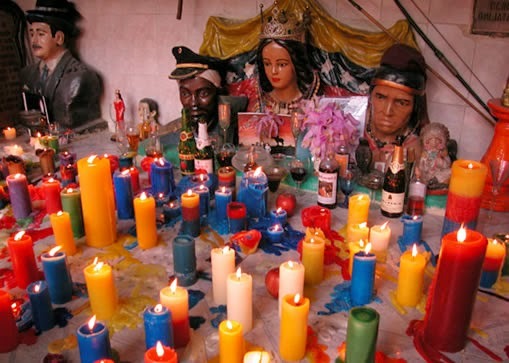
ABOUT VOODOO'S LITTLE SISTER, SANTERIA